


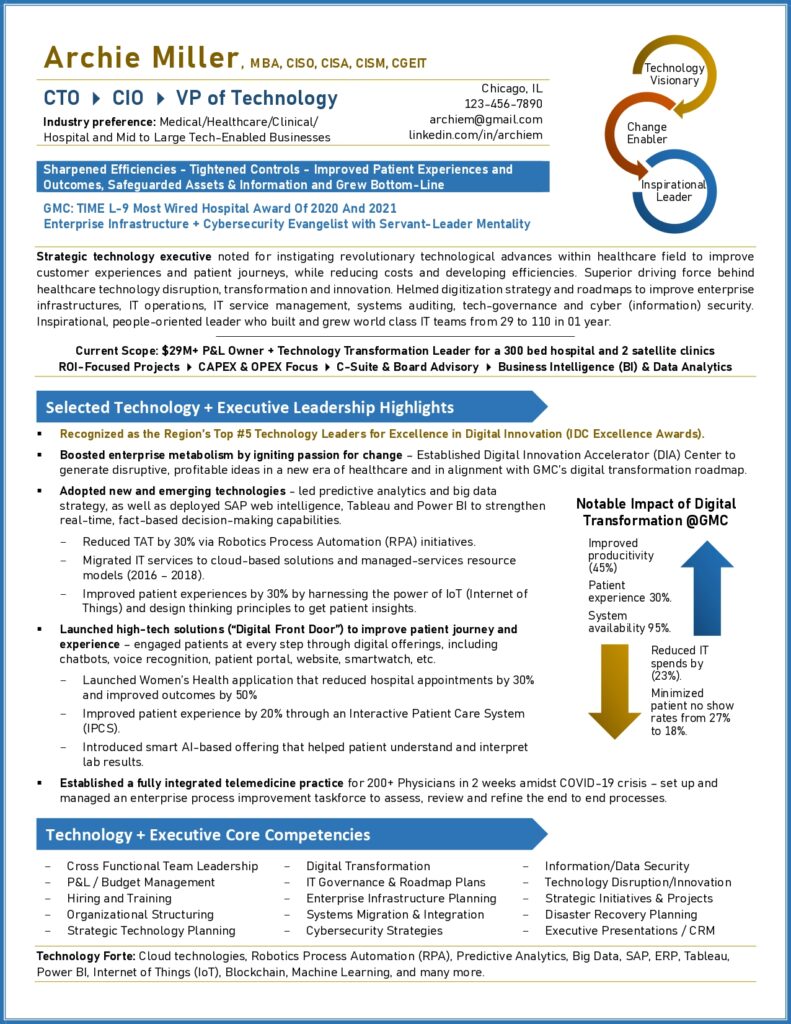
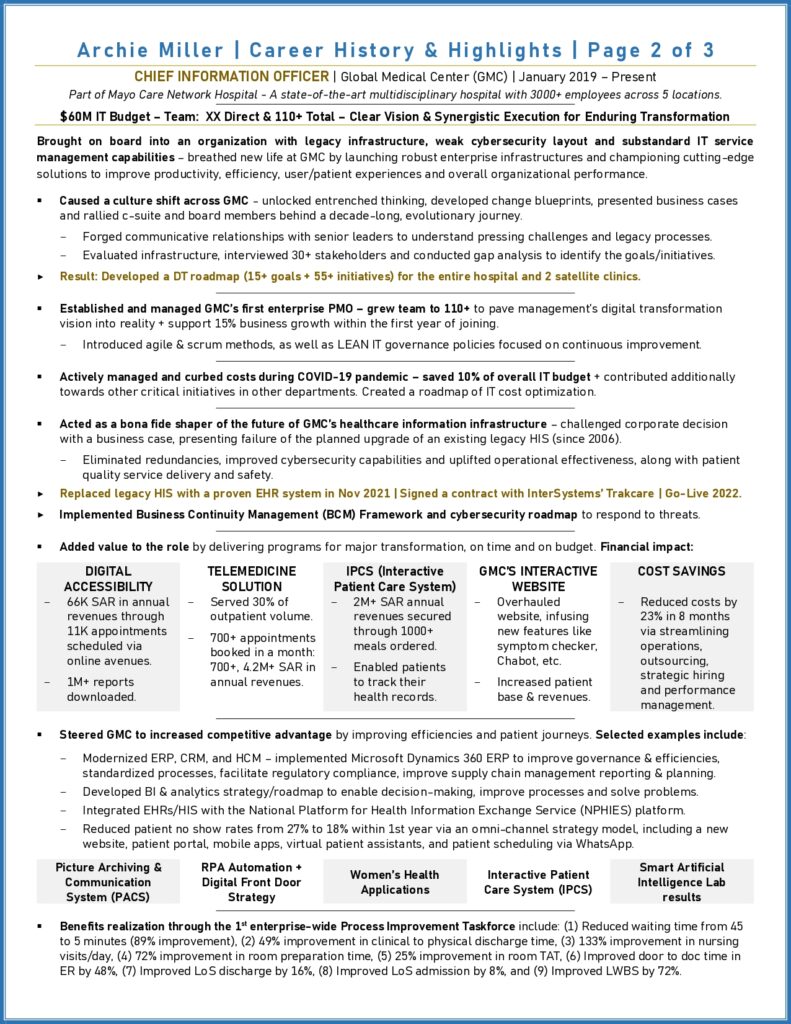
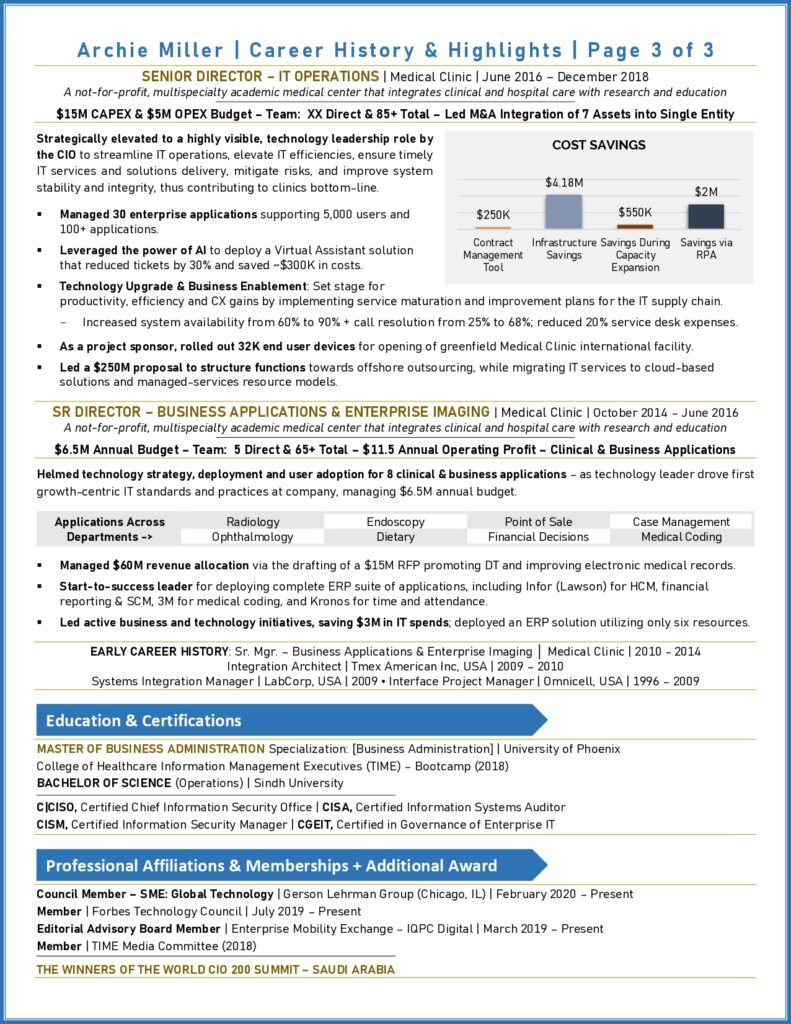


The C-suite resume examples above illustrate a principle every board and search committee understands instinctively: at this level, a resume is not a formality, it is a governance document. It is the first proof point of judgment, scale, and return on investment that a hiring committee will see, often before you ever enter the room.
**Why the Resume Itself Is a Strategic Asset**
A resume built for the C-suite is a career narrative, not a job history. It connects boardroom-level decisions to measurable business outcomes: revenue growth, margin expansion, market entry, turnaround performance, or successful exits. Every example on this page reflects that discipline. Reviewing real c-level resume samples before writing your own gives you a benchmark for what separates a credible candidate from an exceptional one.
**Strategy Comes Before Formatting**
The strongest c-suite resumes are built around a clear strategic thesis: what this executive delivers, at what scale, and under what conditions. That thesis dictates which accomplishments earn space on the page and which get cut. The c-level resume samples featured here show how a results-driven structure aligns an executive’s track record directly with what the target board or CEO is trying to solve.
**Positioning Determines Relevance**
The same executive career can be framed a dozen different ways depending on the audience. Precise content positioning tailors your experience to the specific industry, ownership structure, or growth stage of the target company, so a reviewer sees immediate relevance rather than a generic list of duties. The samples above demonstrate how positioning shifts emphasis without ever compromising accuracy.
**Personal Brand Is the Differentiator**
At the executive level, competing candidates often have comparable credentials. What separates the finalist from the runner-up is a distinct, well-articulated personal brand: the specific reputation, leadership philosophy, and signature results an executive is known for. A sharp personal brand, visible from the first line of the resume, gives decision-makers a reason to remember you.
**The Profile Synopsis Sets the Tone**
The opening synopsis is the highest-leverage real estate on the page. In seconds, it must communicate scope of leadership, sector authority, and the caliber of results that follow. The examples above show synopses built to earn the next thirty seconds of a reviewer’s attention, which is often the difference between an interview and a pass.
Use these c-suite resume examples as a working reference, then consider the opportunity cost of an underperforming document. A resume that fails to convert at this level does not just delay a search, it can quietly remove you from consideration for roles you were fully qualified to win.